[ 01 · Gradeon — co-founder · 2026 ]
Gradeon
I co-founded Gradeon, designed it and coded the app. 921 cards scanned.
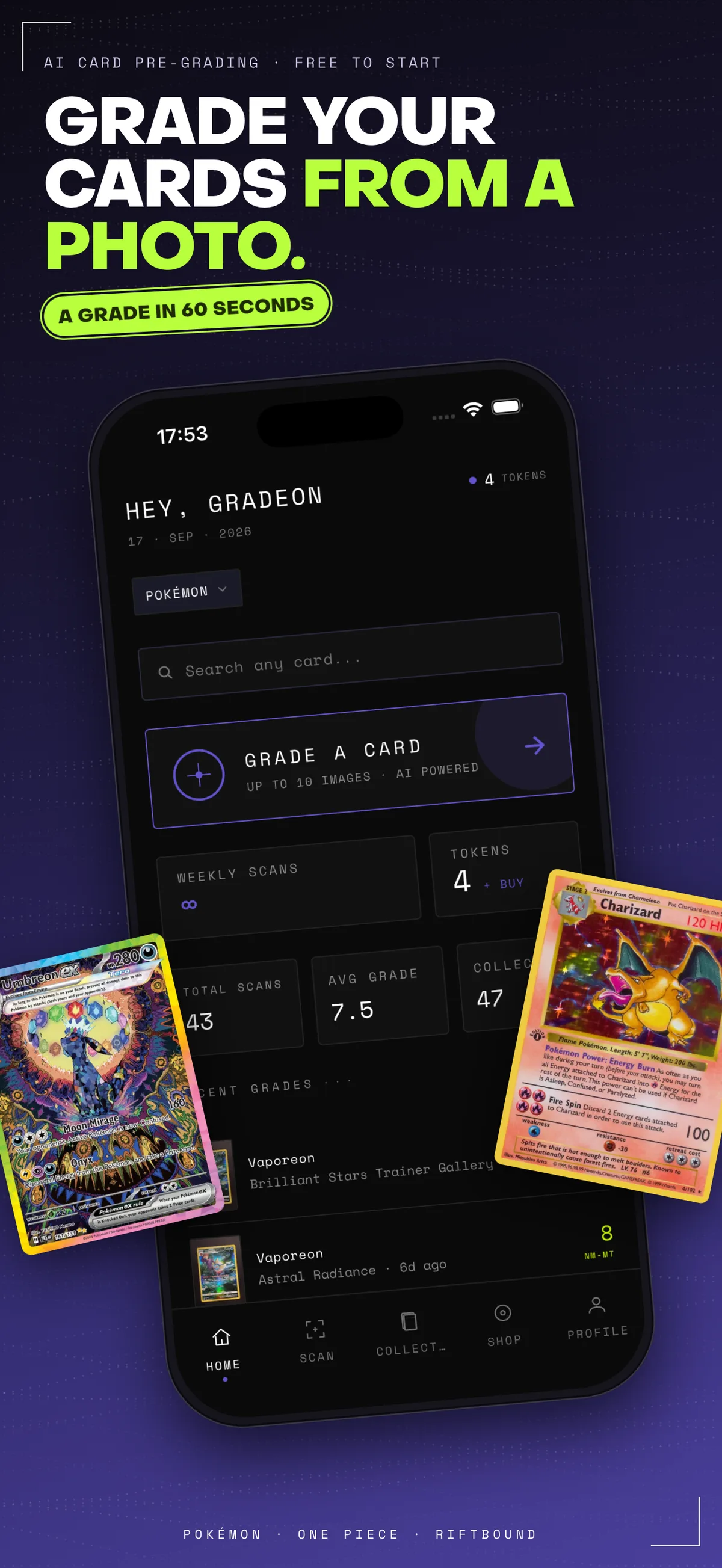
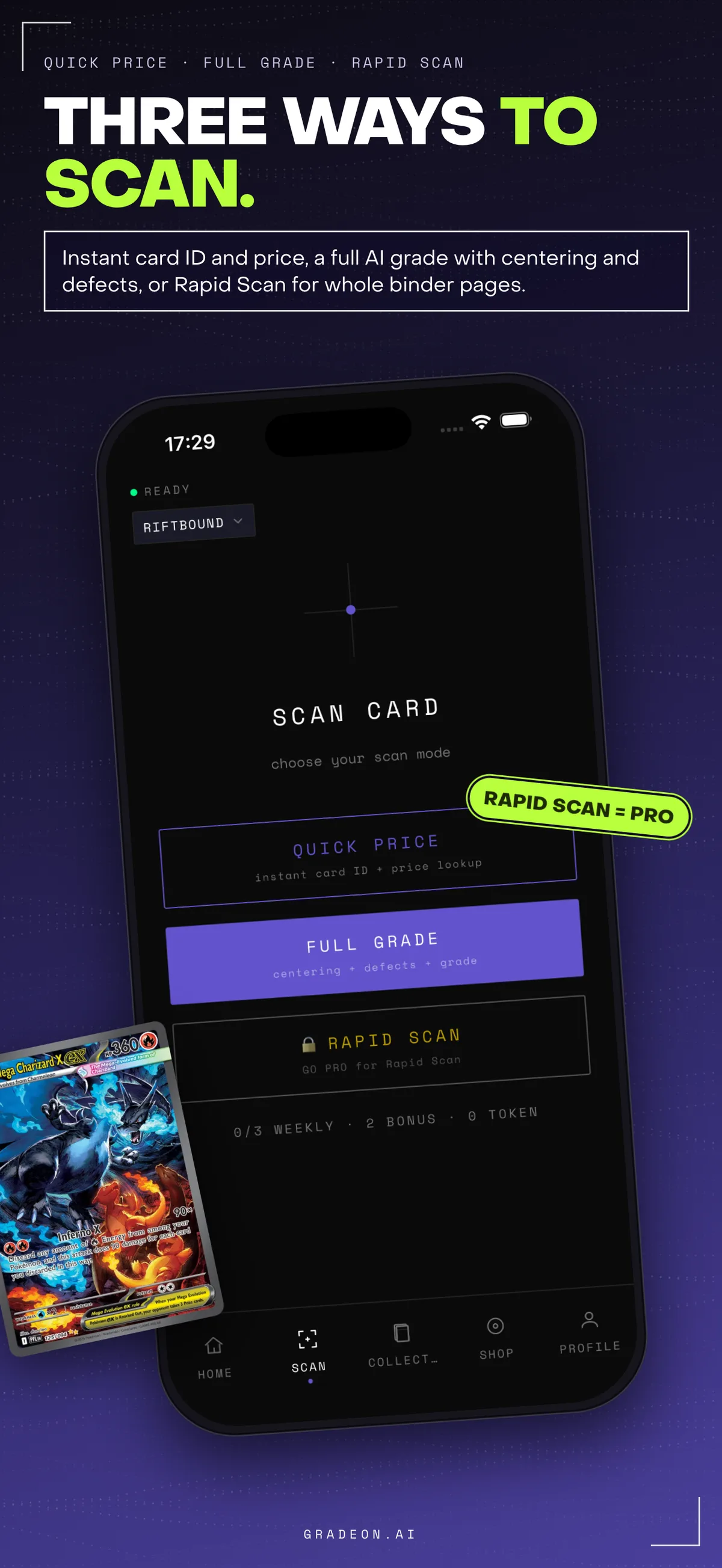
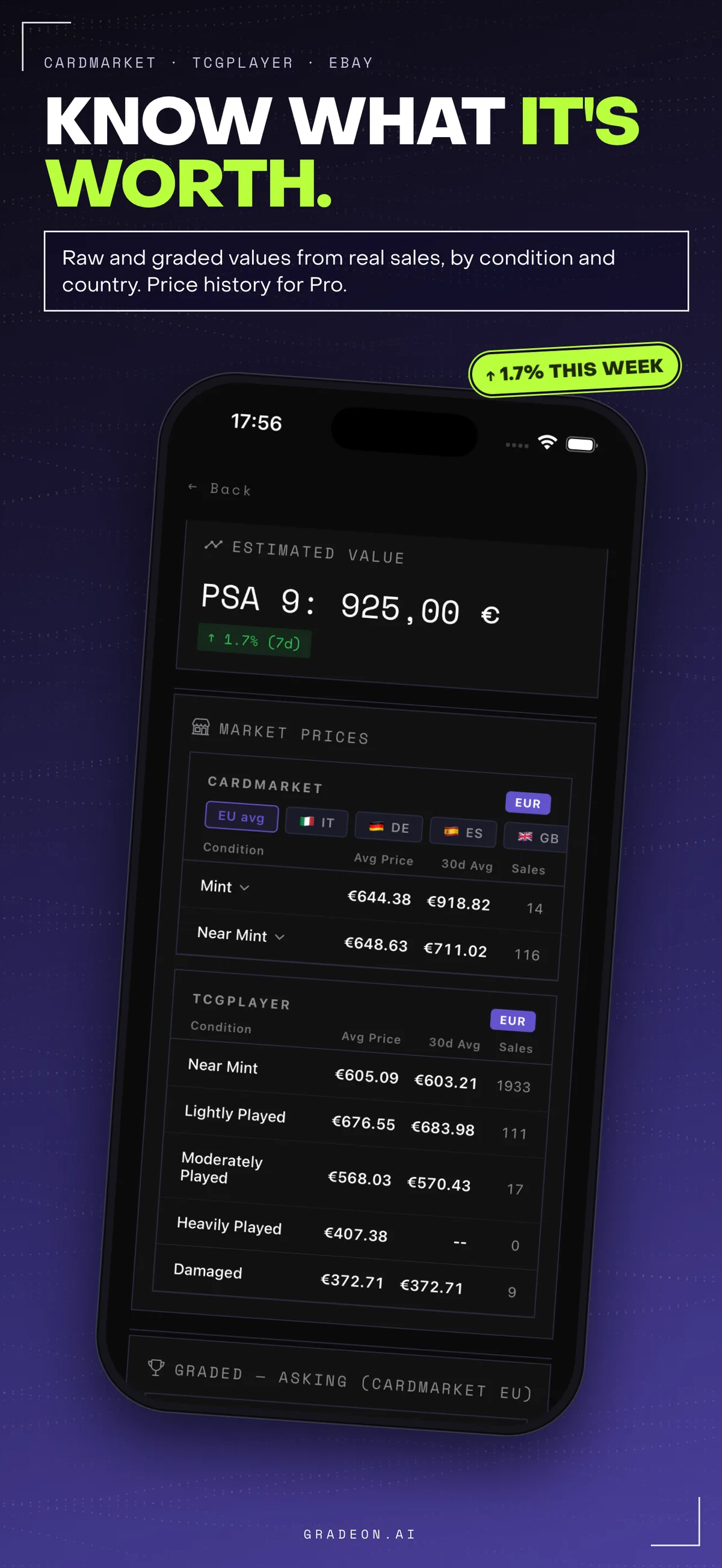
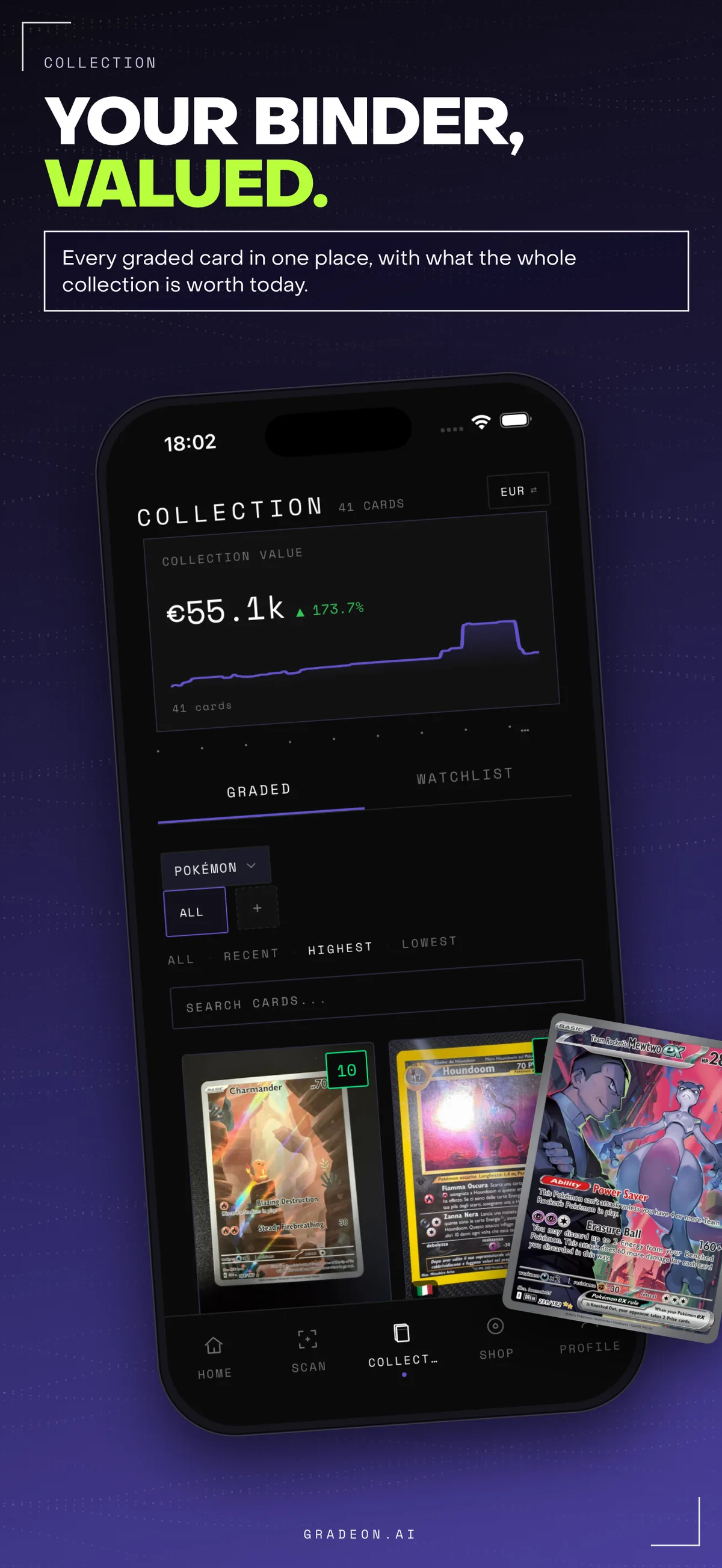
Gradeon grades trading cards from two phone photos. A segmentation model measures the centering while a vision model reads the flaws. The grade comes back in about a minute.
- Role
- Product Designer · React Native · ML
- Year
- 2026
- Tags
- Product · iOS / Android · AI
[ 01 · Context ]
What a graded card sells for depends on its grade. PSA, BGS and CGC score the same four things: centering, corners, edges, surface. Gradeon scores them from two phone photos, before the card is shipped anywhere.
I launched on iOS and Android on 18 March 2026, with Daniele Dominici as co-founder. We sponsor Riftbound Zone, a tournament organiser, and run card tournaments together.
[ 02 · Role ]
Co-founder and product designer. I designed the product, wrote the React Native app, and built the computer-vision pipeline: a SAM centering model on a GPU VM that we keep training. I also make the growth content, starting with the Know Your Card explainer.
Most weeks run the same way: I design a change, ship it, read what the numbers do, and pick the next one.
[ 03 · Problem ]
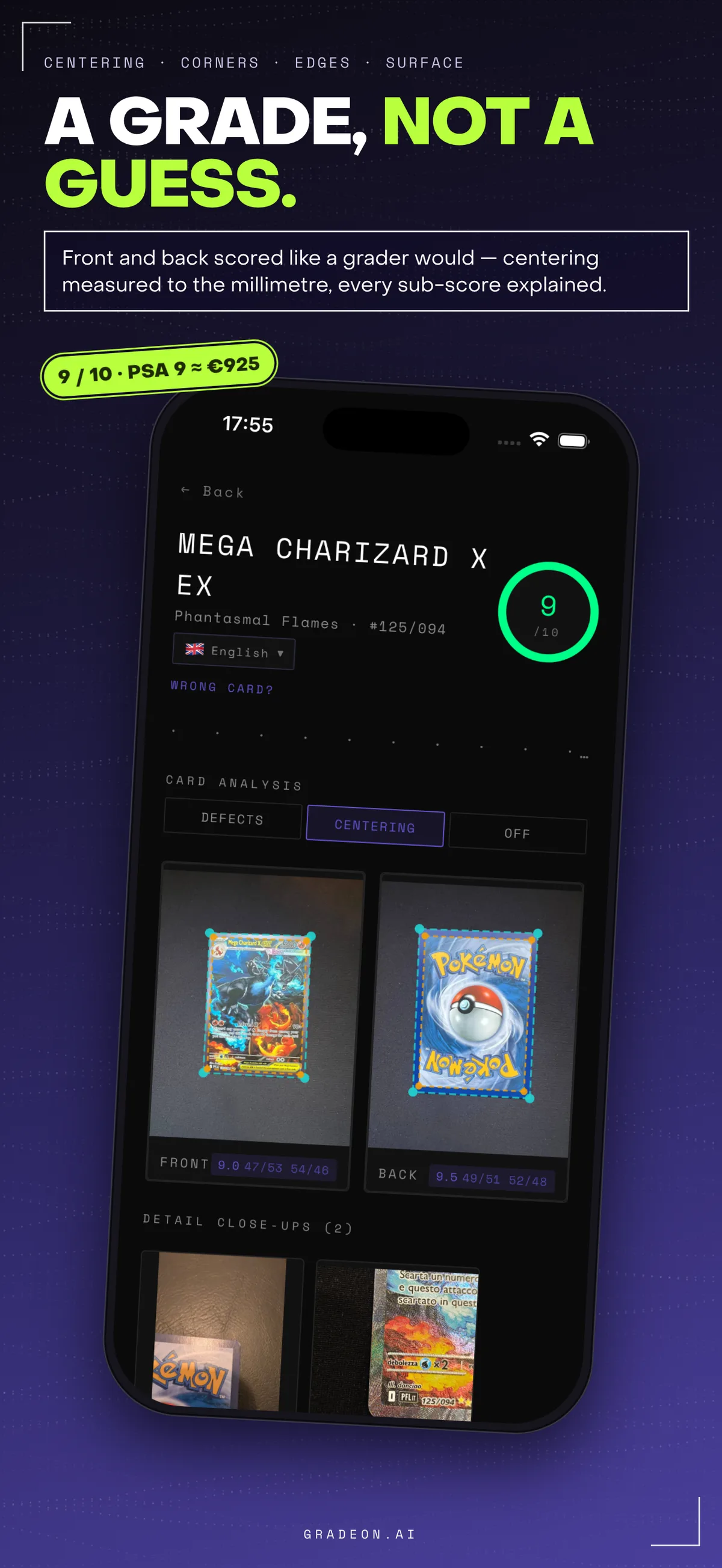
Centering is a measurement. A card sits 47/53 left to right because its print is closer to one border, and that gap has to be measured against the real edges of the card in whatever photo someone took.
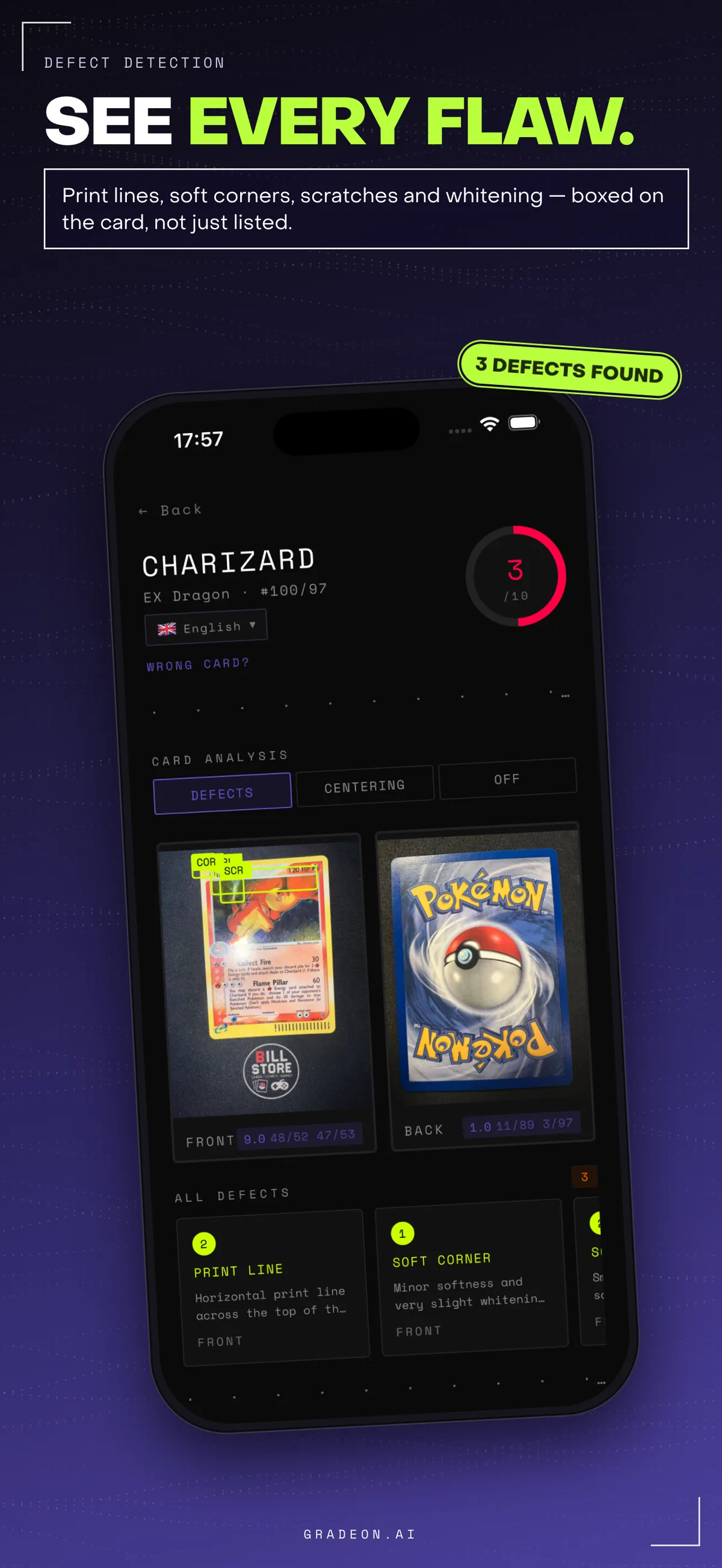
Defects are a different kind of problem. Print lines, soft corners, whitening and scratches get described rather than measured, and they can sit anywhere on either face, so they need their own tool. Both halves still have to agree on which of 22,755 cards you are holding.
[ 04 · Decisions ]
- 01
The grade runs in three phases
A SAM border model on a Google Cloud VM measures the centering, a fingerprint match against the TCGdex catalog names the card, then Gemini reads each image for defects. One general model would be cheaper than keeping a GPU warm, and faster than the 57-second median. I traded that for a grade I can take apart, because a wrong grade points at the phase that made it.
- 02
The centering gate
In September I put a confirm step before save: the app draws the border it found and waits for you to accept or fix it. That tap costs me a few completions and buys a border a human actually looked at. A border nobody checked is a guess with a number on it. The confirmed ones also feed the next version of the model.
- 03
Our own centering model, not a prompt
A general vision model will describe a card, but it will not measure one to the millimetre from a slanted phone photo. So centering runs on a segmentation model we fine-tune on our own scans. It costs a GPU that has to stay warm and a dataset we build one card at a time. It buys a number that is repeatable, and a model that improves with every scan.
[ 05 · Outcome ]
Since launch on 18 March 2026: 777 accounts, 921 cards scanned, 788 of them graded (Supabase production, 20 September 2026). A full grade takes about a minute, median 57 seconds.
The computer vision is the part that is still moving. The centering model learns from every confirmed border, and the defect reading gets checked against what graders actually flag. Improving both is where most of my time goes.
[ 06 · Credits ]
- Federico Vietti — co-founder, product designer, React Native, computer-vision pipeline
- Daniele Dominici — co-founder
- Riftbound Zone — tournament partner: we sponsor them and co-organise tournaments
- Expo · React Native · TypeScript · NativeWind · Zustand · Supabase (Postgres + RLS, Auth, Storage, Edge Functions, Realtime)
- SAM border detection on a Google Cloud VM · Gemini · TCGdex catalog · PokeTrace prices
- StoreKit 2 · Google Play Billing · PostHog
[ Contact ]
Let’s talk
Open to product design roles, and to good collaborations.